
The Hunger Beneath the Surface: Why Eating Disorders Are Never Just About Food 🍽️💔
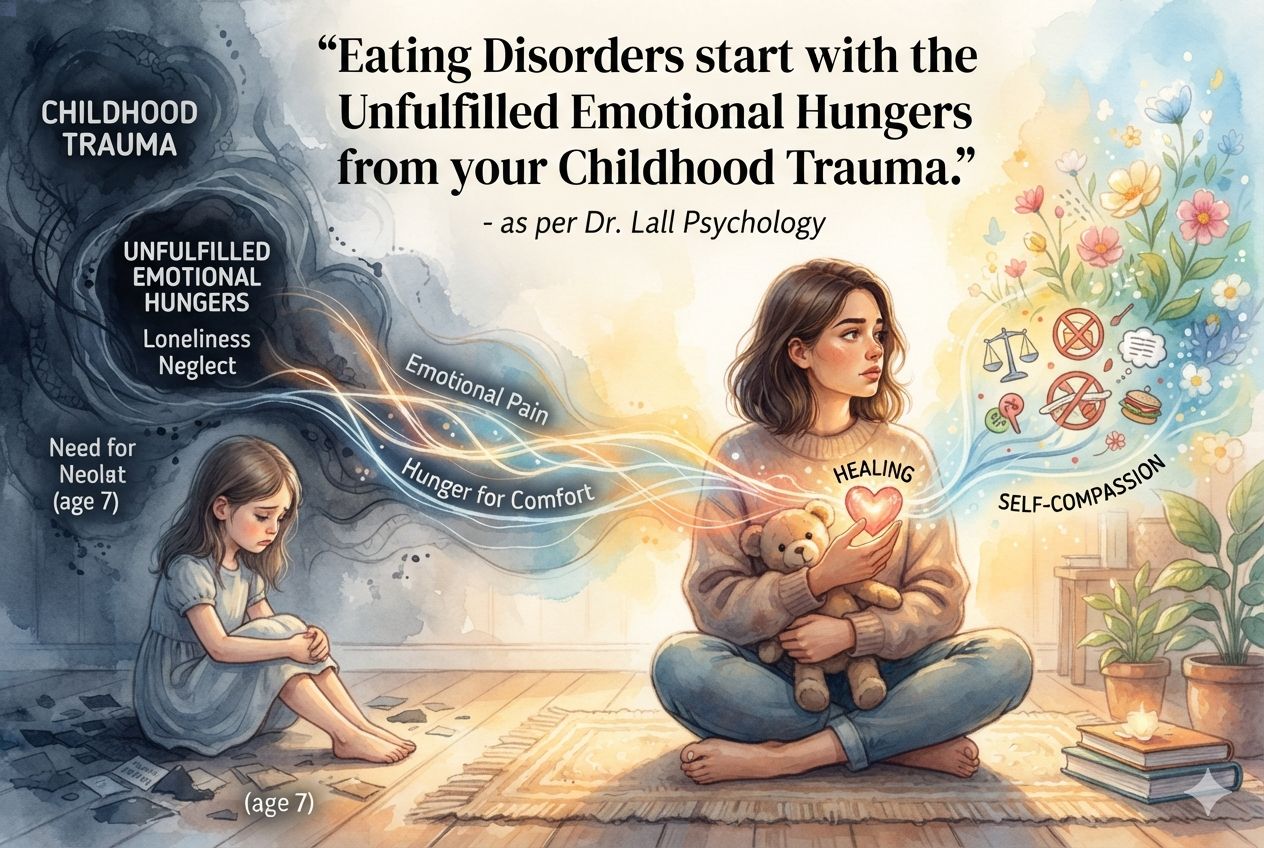
🧠 Decoding the Core Philosophy: The Anatomy of Emotional Hunger
- Physical Hunger: A biological signaling pathway. It is felt in the stomach, develops gradually over hours, and can be satisfied by virtually any nourishing food source.
- Emotional Hunger: A psychological coping mechanism. It is felt as a sudden, overwhelming urge in the mind, target-locks specific comfort profiles, and remains completely unfulfilled no matter how much food is consumed.
+-----------------------------------------------------------------+

|                      THE DUAL NATURE OF HUNGER                  |
+-----------------------------------------------------------------+

| PHYSICAL HUNGER                     | EMOTIONAL HUNGER          |
| - Felt in the stomach               | - Felt intensely in the   |
| - Develops gradually over time      |   mind                    |
| - Satisfied by biological fuel      | - Triggered by emotional  |
| - Ends when full                    |   voids or trauma         |
|                                     | - Insatiable via food     |
+-----------------------------------------------------------------+
💔 The Path from Childhood Trauma to Disordered Eating
1. The Primary Void (The Unmet Need)
2. Emotional Dysregulation & Alexithymia
3. Food as a Non-Verbal Communication System
- The Restrictive Framework: By severely limiting intake, the individual creates an artificial, absolute bubble of control in an otherwise chaotic world, transforming internal chaos into tangible, numerical discipline.
- The Binge Framework: The act of rapidly consuming massive quantities of food serves as a literal attempt to stuff down unexpressed grief, anger, or emptiness, using food as a temporary, neurochemical sedative.
- The Purge Framework: Purging acts as a somatic release valve, a visceral physical expulsion of the deeply internalized shame and self-hatred that originally belonged to the childhood abuser or critic.
📊 Mapping the Triggers: Clinical Trajectories of Trauma
| Childhood Trauma Profile | Unfulfilled Emotional Hunger | Resulting Disordered Coping Strategy |
|---|---|---|
| Hyper-Critical / Perfectionist Upbringing | Explicit Validation & Acceptance | Anorexia Nervosa Spectrum (Achieving flawless bodily control to earn love) |
| Emotional Neglect / Absent Caregivers | Presence, Comfort, & Protection | Binge Eating Disorder (BED) (Using food as a steady, reliable proxy for warmth) |
| Volatile / Unpredictable Home Environment | Basic Safety & Autonomy | Bulimia Nervosa (Cyclical ingestion of comfort followed by frantic, protective purging) |
⚡ The Illusion of Control: Moving Beyond the Scale
[ Childhood Trauma ] ──> [ Emotional Dysregulation ] ──> [ Deep Internal Helplessness ]
                                                                   │
                                                                   ▼
[ Somatic Resolution ] <── [ Disordered Action ] <── [ Illusion of Absolute Control ]
🛠️ The Roadmap to Authentic Healing: Addressing the Soul’s Hunger
1. Shift from Shame to Deep Curiosity
2. Develop the Skills for Interpersonal Somatic Awareness
3. Actively Reparent the Inner Child
4. Work with an Explicitly Trauma-Informed Professional
🌟 Final Thoughts: You Are Starving for Love, Not Food
+-----------------------------------------------------------------+

|                    A GENTLE RECOVERY AFFIRMATION                |
+-----------------------------------------------------------------+

|  "My hunger is valid, but it does not belong to the present.   |
|   I am safe now. I can handle this emotion.                     |
|   I am choosing to feed my soul with the love, compassion,      |
|   and safety it has always deserved."                           |
+-----------------------------------------------------------------+
Dr. Lall Psychology & MindCare Services
Promotional Video : https://www.youtube.com/watch?v=T8OQ2YwKoe0
Quantum Psychology Experiential Program
Admission Form Available at : https://www.amazonauthor.in
YouTube Subscribe : https://www.youtube.com/@drlallpsychology
Linkedin Connect : https://www.linkedin.com/in/drlallpsychology
Linkedin Follow : https://www.linkedin.com/company/drlallpsychology
WhatsApp Channel : https://whatsapp.com/channel/0029VbDEEVb4o7qRCY6UEp38
To Buy Books – by – Dr. Solomon Lall 3-PhDs : Author, Mind Research Scientist, Grahastya YogRishi, Sr. Consultant : Emotional Health & Mental Wellness.
Most Popular, Acclaimed and Renowned Published Book, Now on Amazon book Stores throughout the world
Author Page : https://www.amazon.com/author/drlall
1) https://a.co/d/09tTuF6s : Quantum Psychology: Freedom from Painful Mind Matters
2) https://a.co/d/045dAL7q : Mental Hygiene is The New Dental Hygiene: The Science & Art of Keeping your Mind Clean
3) https://a.co/d/02a2WXGT : Menopause – The Mindful Pause: Redefining Menopause Through Mental Hygiene, Science, and Self-Discovery
4) https://a.co/d/01s1ae3A : Sanātan Psychology: The Science & Wisdom of Ancient Bhārata
5) https://a.co/d/0j3WmYTP : Quantum Biology: Healing the Mind With Secret Science
6) https://a.co/d/0dOByGYF : 1-3 : Quantum BioHack: The Secrets of Energy, Vibrations, Frequency & The Rhythmic Healing
7) https://a.co/d/0cPAiaQg : 2-3 : Quantum BioHack: The Secrets of Energy, Vibrations, Frequency & The Rhythmic Healing
8) https://a.co/d/0dnGlHR3 : 3-3 : Quantum BioHack: The Secrets of Energy, Vibrations, Frequency & The Rhythmic Healing
9) https://a.co/d/02XShiQh : Wired For JOY: A science-backed, heart-centered exploration of your happy hormones
10) https://a.co/d/05uD1fnf : Grahastya Yoga: The Supreme Yoga for Everyone
11) https://a.co/d/0eZn6yPF : Quantum Parenting: Parenting in the AI Age
12) https://a.co/d/03ybLa0Q : The CODD Problem : Cortisol Overload and Dopamine Deficiency.
13) https://a.co/d/00WOJjAr : Where is Your Mind Located: The Bhoot Blueprint
14) https://a.co/d/0hS1J6xK : Beyond Maya: Awakening the Mind’s Secret Science
For School & University Mental Wellness Partnerships :
For Schools – Download Flyer – (Very Popular) : https://drive.google.com/file/d/1qJ8uoDlHK7Pr0iXmID5oMFv-DkxbzV0H
For Campus – Campus Influencer Program –
https://drive.google.com/file/d/1UBFaSfoGQGBOg86G0uIgr4SUigg3n0pF
send Your Resume to mindlabs@authordrlall.com
To Check all Ongoing Job Opportunities. Study the Job Descriptions from our Associates Linked Posts :
: Social Media Content Creator – All over India. : https://www.linkedin.com/jobs/view/4435409715/
: University, School & Campus Influencer – All over India : https://www.linkedin.com/jobs/view/4433157584/
: Associate Psychologist – All over India.
https://www.linkedin.com/jobs/view/4436464924
Dr. Solomon Lall Psychology & MindCare Services is a premier emotional health and mental wellness practice delivering trusted, evidence-based psychological care. Led by Dr. Solomon Lall (23+ years experience, 2,500+ clients, 12,500+ therapy hours), the practice blends ancient Vedic mental body yogic concepts with modern mind sciences.
We provide holistic, tailored online services worldwide using a proprietary Quantum Psychology Blueprint and Quantum Biohack Framework. Specialized programs address emotional discovery, recovery, loneliness, pain, and age-specific mental health needs for individuals and corporates.
https://drlallpsychology.com
https://drsolomonlall.com
https://lalldr.com
https://whereismytherapy.com
https://leadpsychologist.com